
In a specialty manufacturing environment, quality evidence is generated by different machines, instruments, and teams. Expert Tech Pilot engineered purpose-built applications to capture those measurements, connect them with the correct production identity, evaluate results against defined criteria, and preserve the information for analysis and traceability. The result is a practical example of three engineering services working together: measure and monitor, validate and trace, and integrate and analyze.
Project overview
Zircoa Inc. is a technical ceramics manufacturer in Solon, Ohio. Its quality-control work spans raw material preparation, forming, dimensional checks, post-process density measurement, and optical inspection. Each activity produces useful data, but the source, format, and operational context differ from one test to the next.
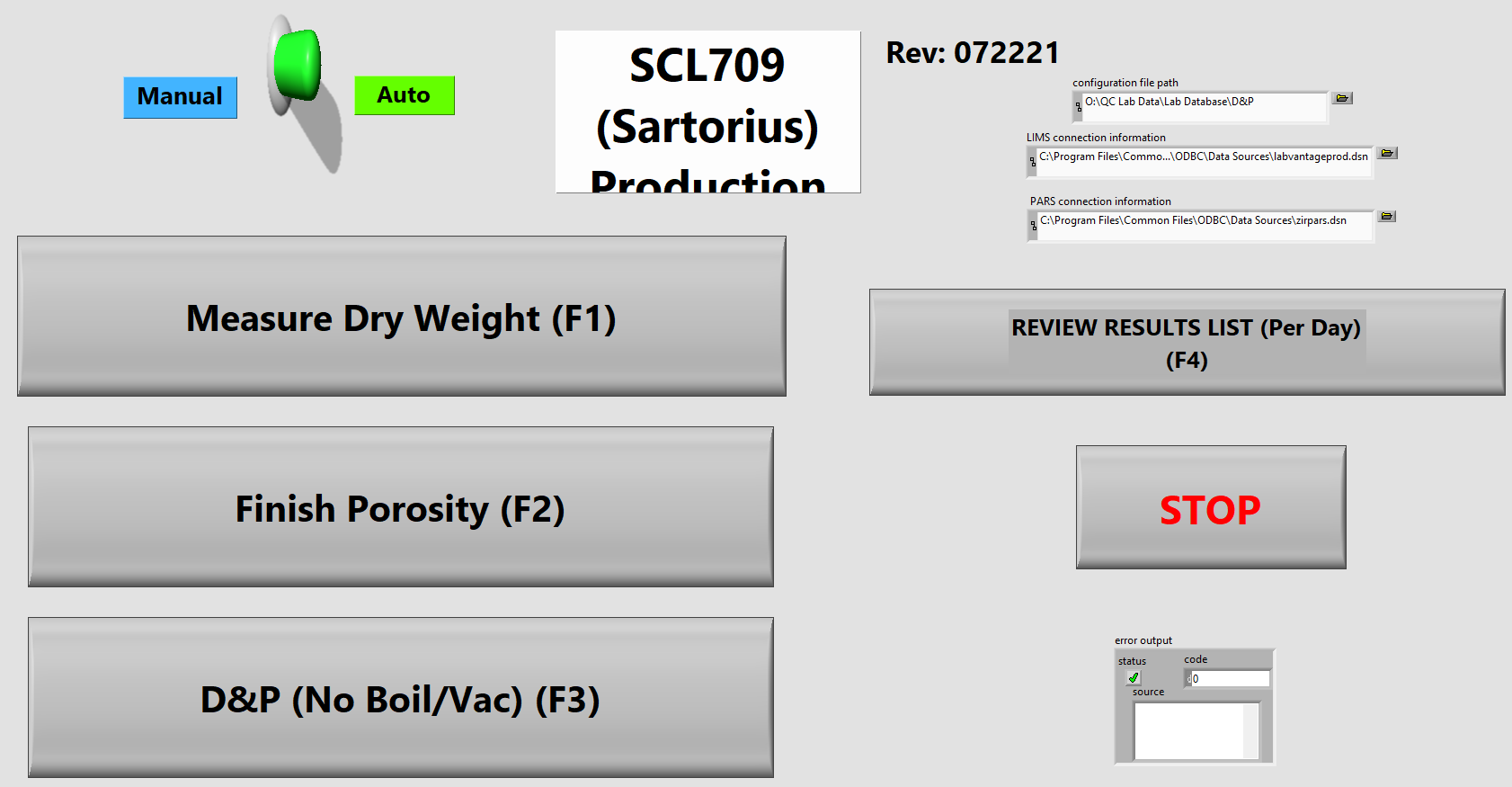
Expert Tech Pilot developed custom LabVIEW applications for those tests. The applications communicate with the instruments, apply product-specific acceptance criteria, persist results in SQL, and support SPC review. Where the process requires it, results also participate in LIMS-supported laboratory workflows and traceability.
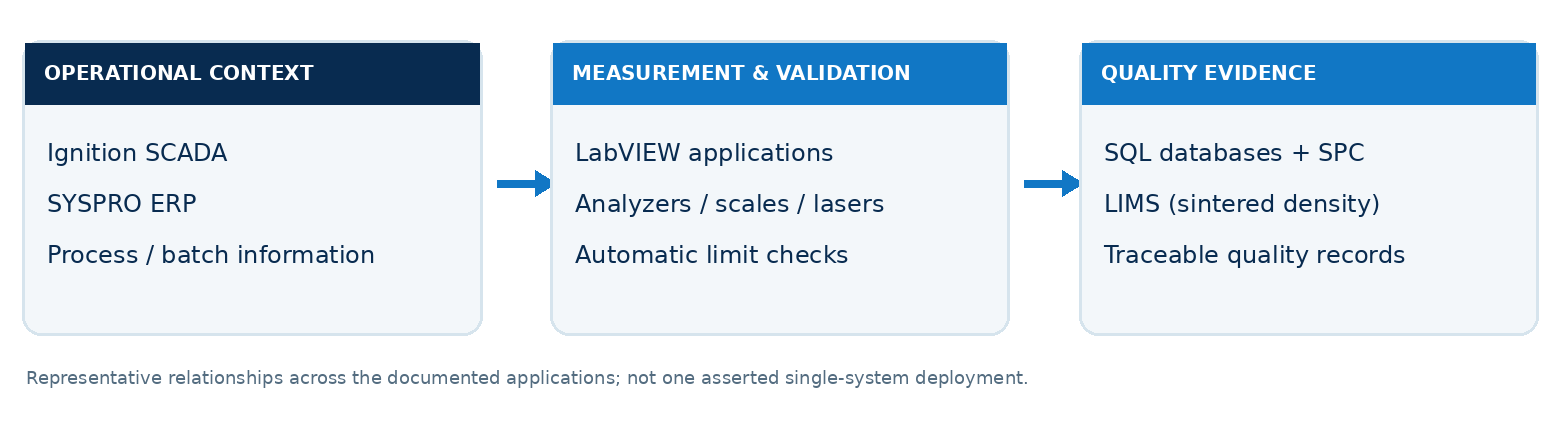
When quality data lives in separate systems
Zircoa’s quality-control work spans raw material preparation, forming, dimensional checks, post-process density, and optical inspection. Each activity creates useful data, but the source, format, and operational context are different.
The integration challenge
- Industrial process signals must be understood alongside mixer conditions and operating history from Ignition SCADA.
- Quality measurements must be associated with the right SYSPRO ERP job, batch, product, or composition.
- Test devices — moisture analyzers, scales, micrometers, laser sensors, and cameras — require fit-for-purpose software interfaces.
- Measurement values must be evaluated against the correct limits, stored for later review, and available to SPC analysis.
- Selected laboratory results also need to participate in LIMS-supported quality workflows and traceability.
A connected, fit-for-process engineering approach
Rather than assuming one monolithic application, Expert Tech Pilot built specialized LabVIEW workflows suited to particular manufacturing tests while using production identifiers, process information, and persisted results to connect the evidence.
This is not just instrument programming. It is the engineering work required to make a measurement useful to operators, traceable to production, and actionable in quality and reporting workflows.
Applications built around real production tests
1. Press-mix batch qualification
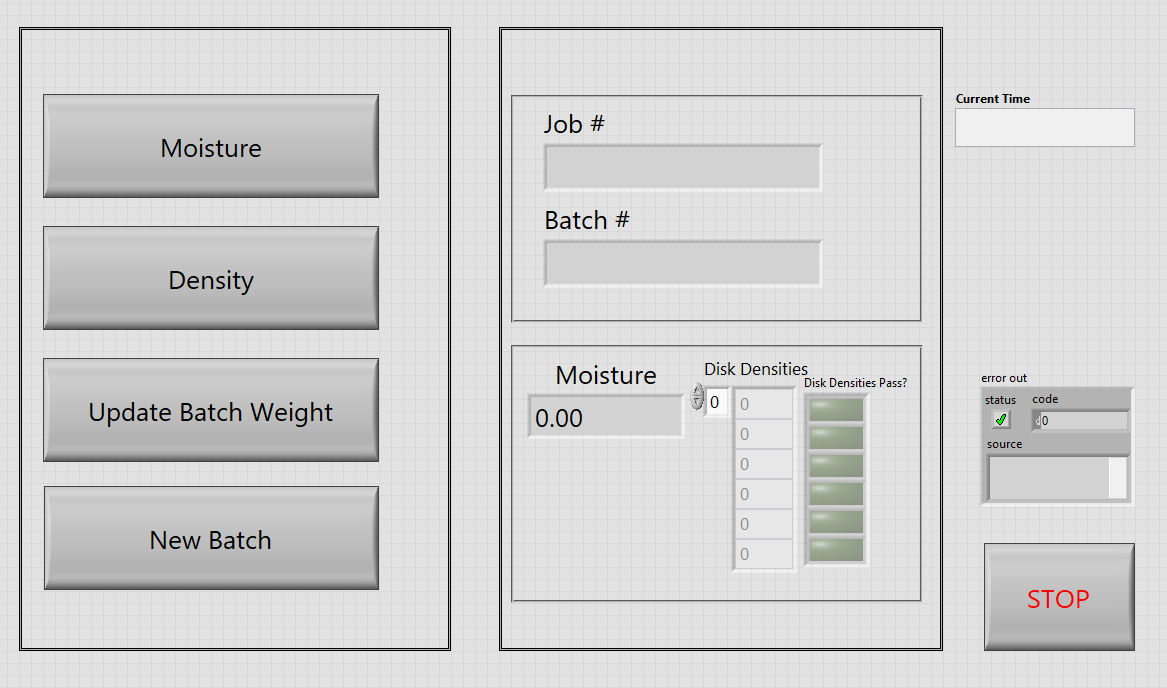
The press-mix workflow evaluates both moisture content and pressability — the green density achieved at a fixed forming pressure. The LabVIEW application combines Ignition mixer data with SYSPRO job number, batch number, and composition, while communicating with a moisture analyzer, scale, and digital micrometer. It automatically evaluates defined acceptance criteria and communicates pass/fail results to operators.
2. Green (unfired) density measurement
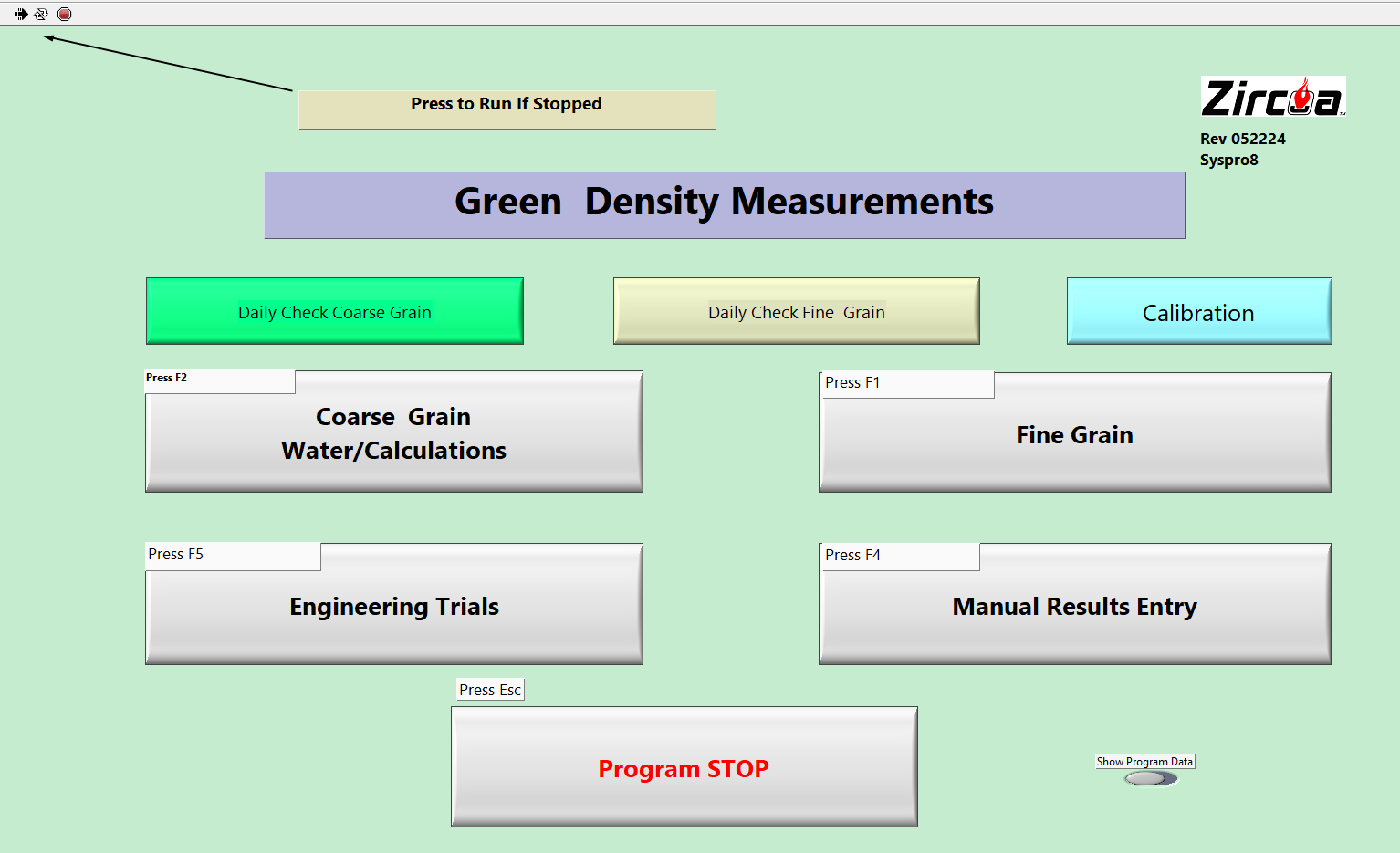
Before sintering, green density influences the dimensional and mechanical properties of finished ceramics. A LabVIEW interface collects liquid-displacement measurements from scales, retrieves product-specific density limits using SYSPRO identification, evaluates the result, and records it in an SQL database. Daily calibration checking and SPC analysis support consistent, reviewable measurements.
3. Large-crucible dimensional inspection
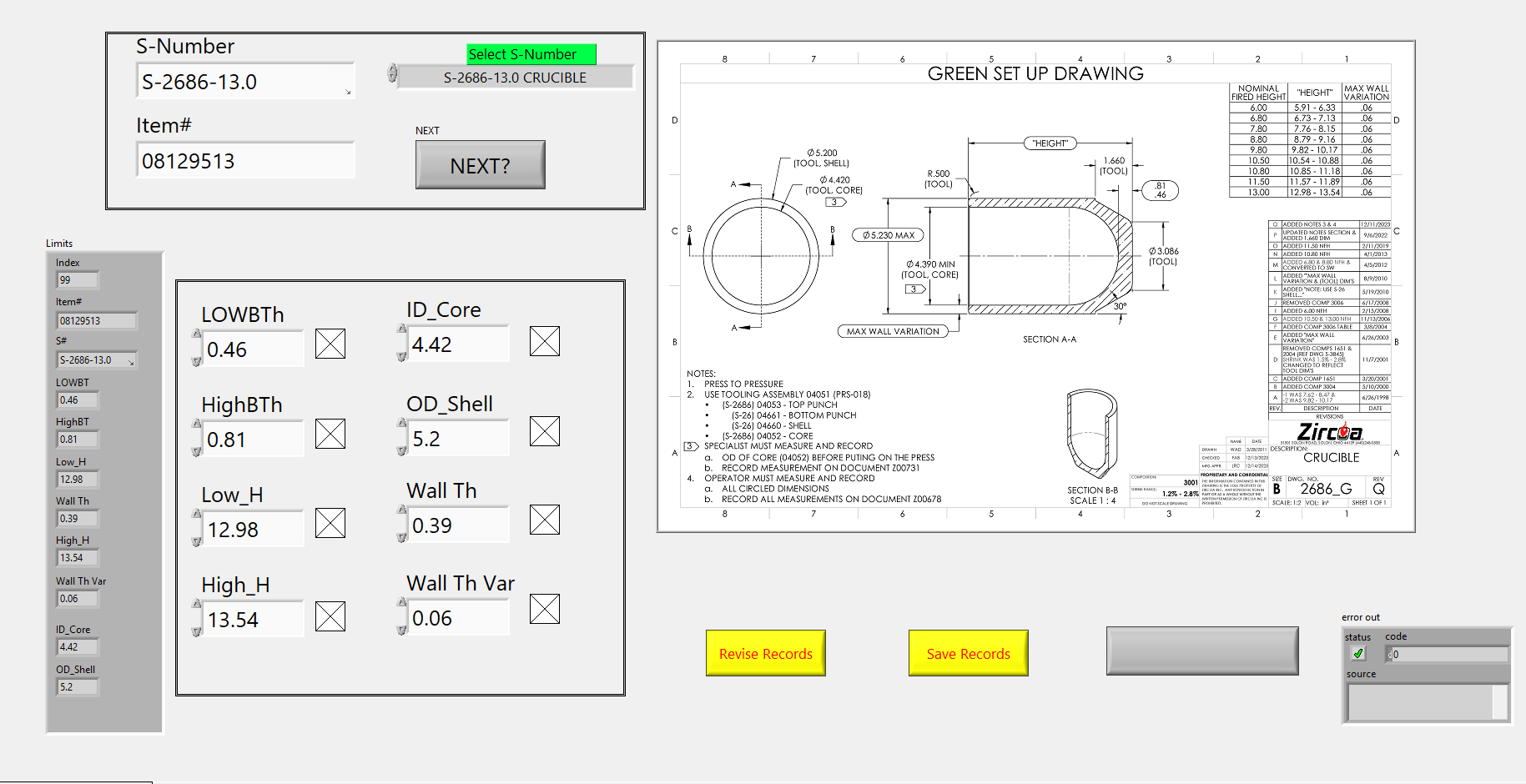
For investment-casting crucibles, controlling height, bottom thickness, and sintered density is critical. The project brief identifies a measurement need for large parts where suitable commercial instrumentation was not available. Expert Tech Pilot developed custom applications using Keyence laser devices through LabVIEW interfaces to perform dimensional measurements and visualize tolerances.
4. Crucible sintered-density measurement and LIMS integration
The post-process crucible density workflow extends beyond a stand-alone test station. The supplied project brief explicitly identifies integration with a Laboratory Information Management System (LIMS), enabling density measurements to be associated with in-process SCADA information and ERP records for traceability.
5. Vision-based ceramic bead inspection
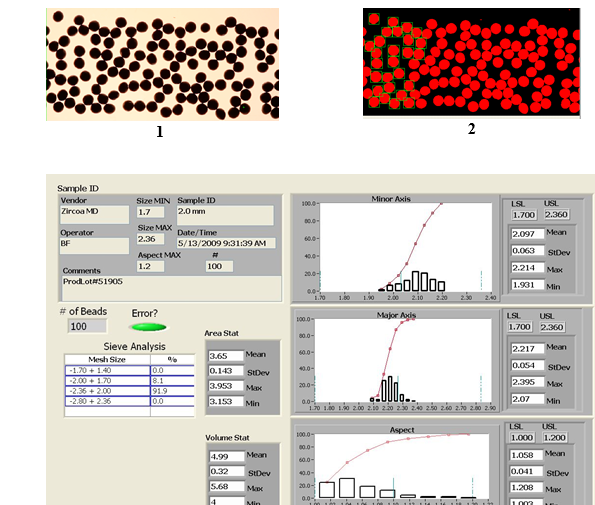
Expert Tech Pilot also developed a cost-conscious image-analysis approach using a high-resolution consumer DSLR camera and LabVIEW. Backlit bead arrangements are captured, individual beads are segmented and measured, and results are stored for analysis. SPC tools provide a way to monitor variation and evaluate process capability over time.
From laboratory results to the quality record
In this context, LIMS supports the laboratory information layer of the manufacturer’s broader Quality Management System (QMS): it manages laboratory test data and preserves its relationship to manufacturing records. LIMS and QMS are related functions, not interchangeable product categories.
A test result gains more value when quality teams can relate it to the production batch and its process history, rather than treating it as an isolated laboratory value.
The same principle runs through the other workflows. A moisture reading, a density value, or a laser measurement is only as useful as the job, batch, and process context stored with it — which is why the production identifiers are part of the measurement record, not a separate step completed afterward.
Manufacturing software that connects the full data chain
The Zircoa work illustrates what happens when production equipment, quality test stations, operational systems, and enterprise records are treated as parts of the same information problem — not as isolated applications.
| ETP engineering service | Demonstrated work in this case study |
|---|---|
| Measure · Monitor | LabVIEW interfaces for analyzers, scales, micrometers, Keyence lasers, and imaging; SCADA process data from Ignition |
| Validate · Trace | Automated tolerance checks, moisture and pressability tests, density and dimensional measurements, batch identification, calibration checks |
| Integrate · Analyze | SYSPRO ERP context; SQL-stored quality results; SPC analysis; LIMS integration for sintered-density traceability |
Operational value enabled by the engineering
- Less dependence on separately transcribing instrument readings into quality records.
- More consistent application of product-specific limits and immediate operator feedback.
- Stronger linkages between test results, production identifiers, and relevant process conditions.
- Searchable measurement histories and data suitable for statistical process-control review.
- A foundation for future reporting and enterprise integration without discarding useful plant equipment.
These are supported or intended workflow benefits described by the technical implementation; the source does not report quantified gains in throughput, labor savings, scrap reduction, or ROI.
How this extends to other manufacturers
Expert Tech Pilot provides manufacturing data acquisition, quality automation, and integration architecture spanning .NET, SQL Server, APIs, and customer-owned Microsoft Azure environments. Where appropriate, similar production and quality data can be made available to enterprise reporting and analytics.
Azure is an Expert Tech Pilot service capability — not a claimed component of the documented Zircoa deployment.
Why manufacturers engage Expert Tech Pilot
Purpose-built manufacturing software has to reflect the real process, not just the software stack. Expert Tech Pilot combines hands-on LabVIEW measurement development with enterprise application architecture and systems integration, enabling manufacturers to extend established investments in equipment and technology.
Four capabilities that translate beyond this project
| Capability | What it means for a manufacturer |
|---|---|
| Specialized measurement engineering | Applications that work directly with industrial and laboratory instruments, including nonstandard test scenarios |
| Quality workflows built into software | Batch identity, acceptance criteria, traceable test evidence, and reliable data capture |
| Enterprise integration discipline | Data ownership, interfaces, persistence, and reporting designed around existing ERP, SCADA, LIMS, and quality processes |
| Modernization without unnecessary replacement | Extend and stabilize proven plant applications, then integrate additional systems only where there is a clear operational reason |
Start with the process, not the platform
Whether the challenge is an isolated test station, disconnected quality records, an aging LabVIEW application, or a production reporting gap, Expert Tech Pilot can begin with a focused technical assessment and recommend a practical next step.
Source and editorial note
Case study based on the supplied “Custom LabVIEW based Applications for Zircoa Inc.” technical brief and Expert Tech Pilot’s published manufacturing-services positioning. Screenshots are source-supplied examples. The source does not report quantified gains in throughput, labor savings, scrap reduction, or ROI, and no Zircoa Azure deployment is asserted.